THE WANG LABORATORY
Research

The Wang Laboratory

Research

Research

Research programmes

We run four complementary programmes that combine sequencing, spatial profiling and computational genomics to study early tumourigenesis, population differences and the role of repetitive DNA in ageing and cancer.
01

Early evolution and punctuated genomic events in acral melanoma

Why do acral melanomas show early, complex amplifications ('hailstorms') and an order of events distinct from sun‑exposed melanomas?

Acral melanomas frequently lack UV signatures yet carry complex, high‑level focal amplifications that arise early in tumour development. Our 2024 integrative sequencing of multiple progression stages from individual patients shows that these clustered copy‑number transitions—termed 'hailstorms'—are commonly present in in situ lesions and are shared across stages, indicating a punctuated origin.

Understanding the timing and distribution of these events can reveal the initiating genomic instability and nominate early biomarkers for detection in high‑risk patient groups. We combine multi‑regional exome and whole‑genome sequencing with phylogenetic inference and spatial transcriptomics to map clonal architecture across progression stages and anatomical fields.
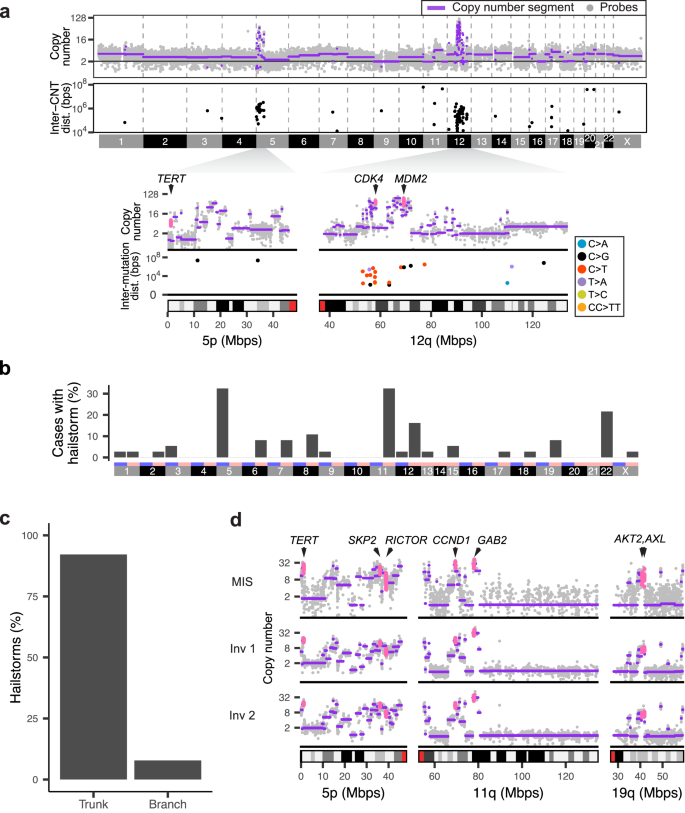
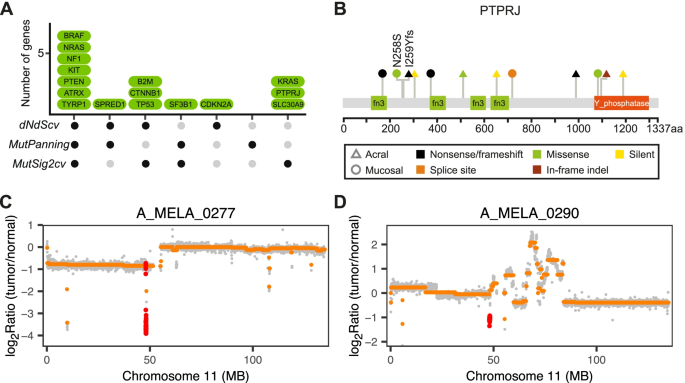
Figure 1 from Wang et al., Nature Communications (2024) — example copy‑number profiles showing clusters of copy number transitions ('hailstorms') in acral melanoma. (Nature Communications, open access article page.)
02

Population and ethnic differences in cancer genomic landscapes

How do mutational processes and driver landscapes differ across populations and contribute to disparities?

Most melanoma genomics has been characterised in sun‑exposed tumours from predominantly White populations, where UV‑induced mutations shape driver selection. In contrast, melanoma subtypes more prevalent in non‑White populations (for example acral and mucosal melanomas) show alternative mutational mechanisms and a higher burden of structural and copy‑number events.

We perform cohort analyses that emphasise diverse patient representation, compare mutational signatures, structural variation and driver repertoires across ancestries, and integrate clinical and demographic data to identify population‑specific early events that could improve screening and therapeutic stratification.

Figure from Wang et al., Genome Medicine (2022) — integrated genomic comparison of acral and mucosal melanomas identifying candidate drivers relevant to diverse patient cohorts (publisher figure page).
03

Ribosomal DNA copy number and a conserved ageing clock

Can rDNA copy number changes serve as a conserved marker of biological ageing and how do they impact tumour biology?

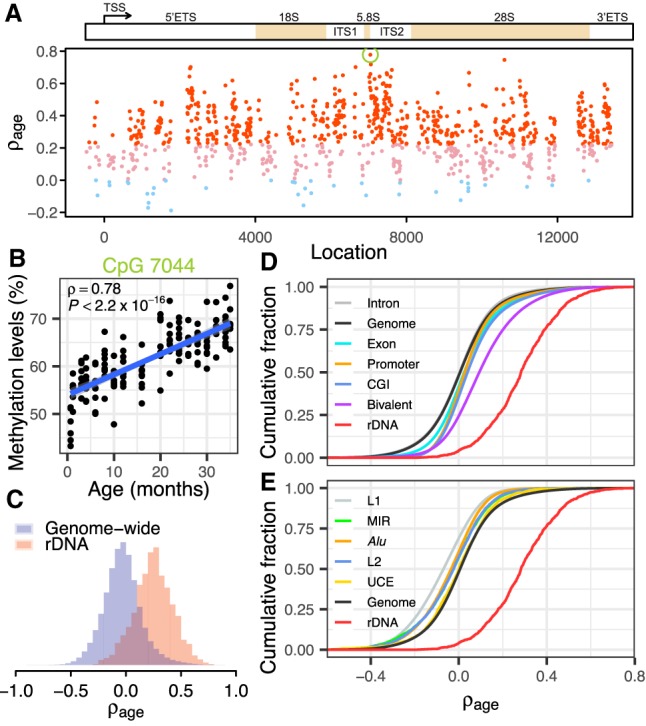
Ribosomal DNA (rDNA) copy number varies widely across individuals and species. We contributed evidence that rDNA arrays harbour an evolutionarily conserved clock of biological ageing and that rDNA dynamics correlate with proliferative and nucleolar activity in tumours.

We study how rDNA copy‑number changes interact with somatic alterations in tumours, and whether rDNA instability or transcriptional changes in rRNA operons create vulnerabilities that could be therapeutically exploited or used as ageing‑linked biomarkers.

Figure from 'Ribosomal DNA harbours an evolutionarily conserved clock of biological aging' (Genome Research) — rDNA‑based age analyses (publisher figure page).
04

rDNA copy number dynamics in cancer and nucleolar activity

How do 5S and 45S rDNA arrays change in tumours, and what is their relationship with proliferation and genomic context?

Our work using TCGA whole‑genome data revealed a recurrent pattern in which cancers often show coupled 5S amplification and 45S loss; these somatic changes correlate with increased nucleolar function and proliferation and associate with specific somatic alterations such as TP53 inactivation.

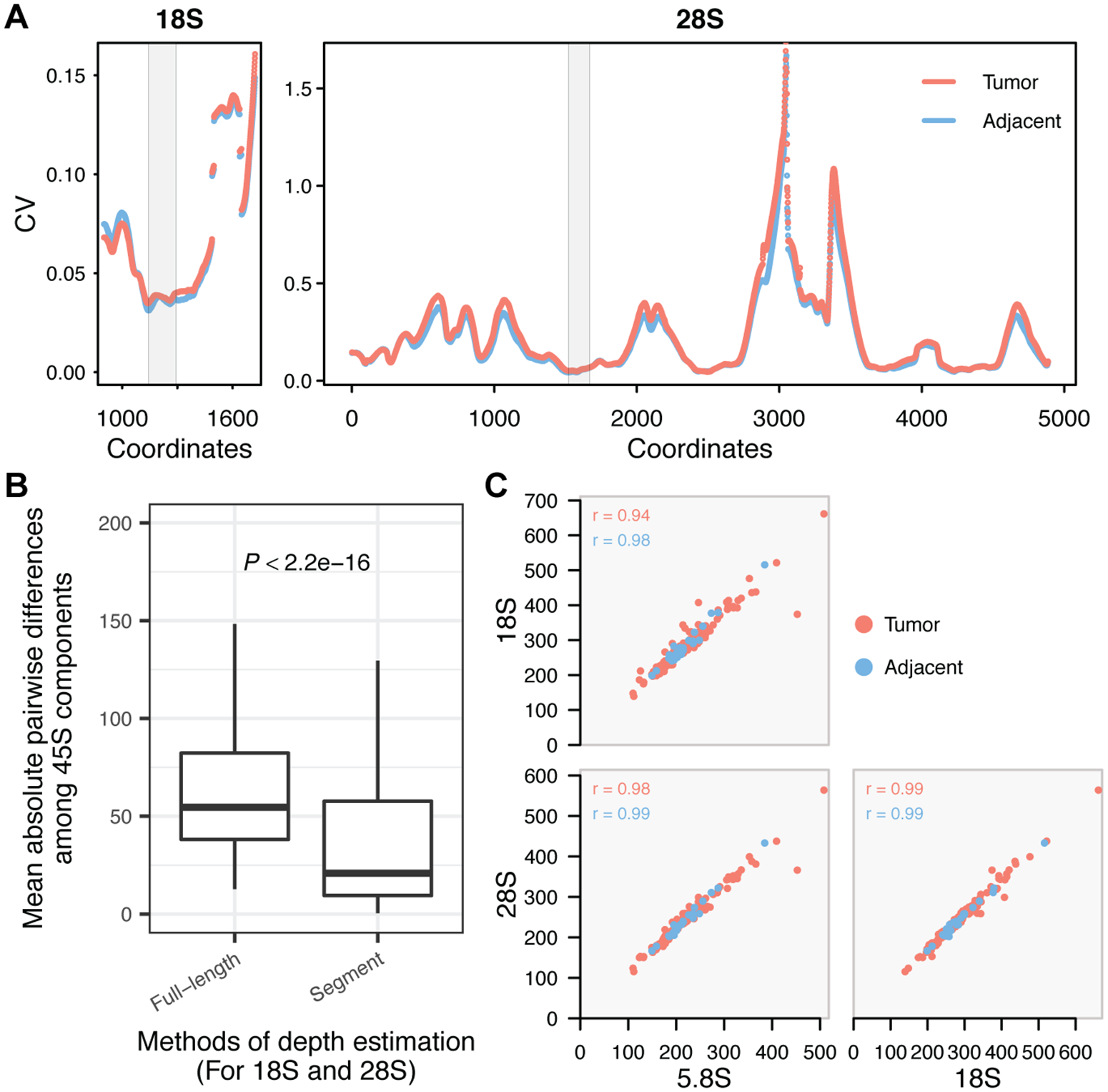
We develop computational approaches to correct for aneuploidy and sequencing batch effects to enable reliable rDNA copy‑number estimation and then link these measures to tumour genetic context and cellular phenotypes.

Figure 1 from Wang & Lemos, PLoS Genetics (2017) — coupled 5S amplification / 45S loss patterns across tumour types (open‑access publisher figure).